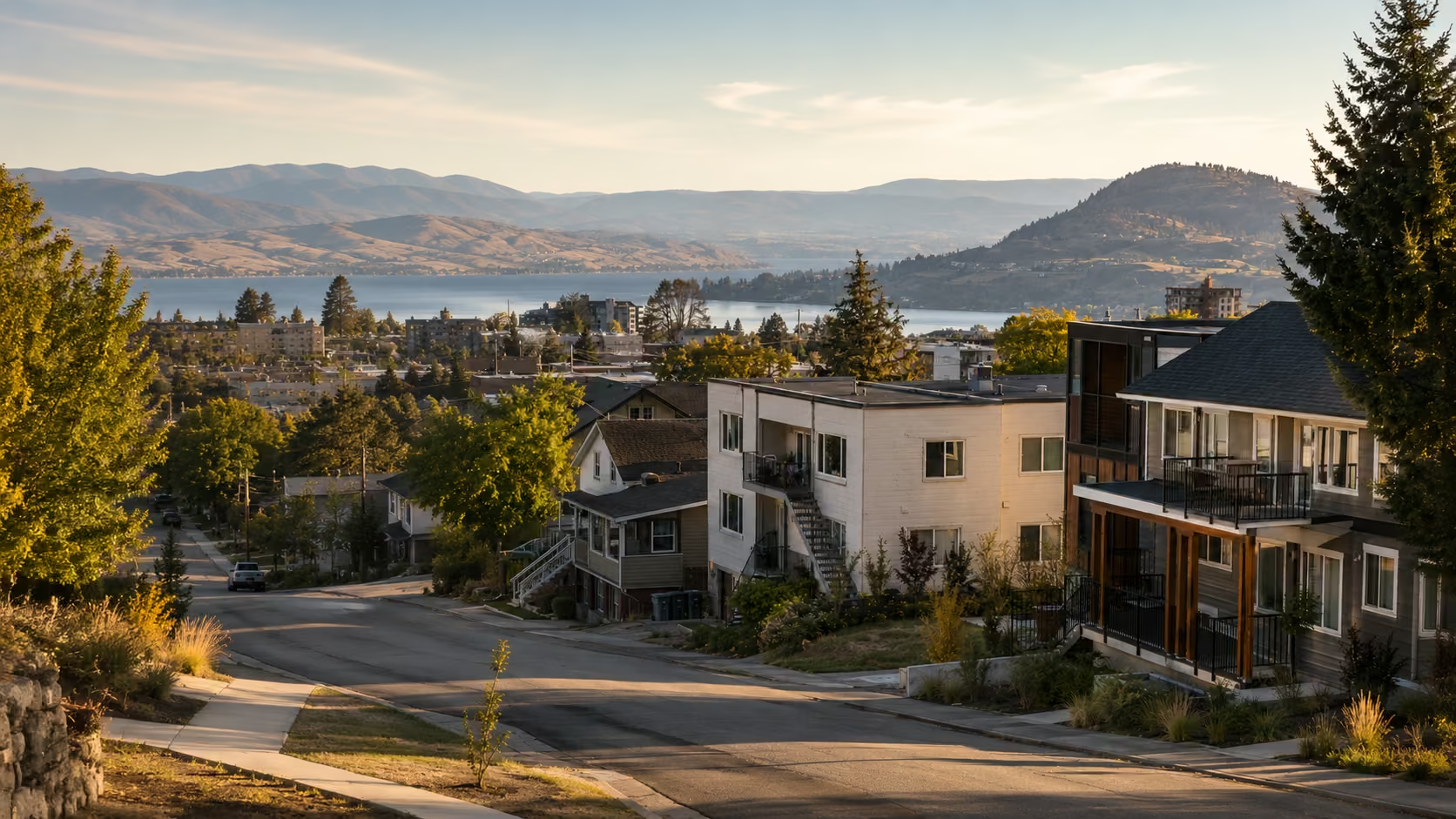
The pitch is familiar. Buy a duplex or fourplex, let the tenants carry the mortgage, build equity in a city people keep wanting to live in. It is a clean story, and for a long stretch in Kelowna it mostly worked.
What the actual sales data shows in 2026 is messier, and more useful. Kelowna small multifamily has not frozen. It has split in two. One group of properties sells close to asking price in under two months. The other group sits for a season or longer and only trades after the seller gives up a big chunk of the original price. The difference between those two groups is not luck. It is readable before you ever write an offer, and reading it correctly is most of the job right now.
We pulled the duplex, triplex, and fourplex sales across the Central Okanagan from January 2025 through the end of May 2026, then set aside the Big White ski-resort units and a cluster of tiny single-room Rutland fourplexes that distort any average. What is left is a clean picture of how income property is actually trading in this market.
The market is sorting on time, not refusing to sell
Start with the number that surprised us least once we saw it. Across the clean set of urban sales, the typical property sold for about 97 per cent of its original list price. Most sellers are getting close to what they ask. That is not the behaviour of a market in freefall, and it is not the story you would expect from headlines about Kelowna posting the highest rental vacancy rate of any major metro in Canada at 6.4 per cent.
The split shows up when you sort by how long a property sat. Properties that sold within 60 days took a haircut of less than 2 per cent off their asking price. Properties that took longer than 60 days gave up a median of around 6.5 per cent, and several gave up far more. Same city, same property types, same six-quarter window. The only real variable is whether the listing was priced to move or priced to test the market.
So sellers are adjusting. They are just adjusting in two very different ways. The disciplined ones price near where the market clears and sell quickly. The hopeful ones anchor high, list, wait, cut, wait again, and eventually transact at a number they could have started at months earlier, minus the carrying costs they ate while the building sat empty or half-rented.
The expensive mistakes cluster in one place
Look at where the deepest discounts landed and a pattern jumps out. The biggest cuts were almost all older, larger fourplexes carrying ambitious price tags.
A 1960-built fourplex in Glenmore listed at $1.925 million and sold for $1.48 million. That is a 23 per cent cut, and it still took 93 days. A 1970 fourplex in Rutland South listed at $1.195 million and closed at $1.01 million, down about 15 per cent. A larger Kelowna North fourplex listed near $1.9 million and sold at $1.65 million after more than 100 days on market. These are not distressed fire sales. They are ordinary buildings whose owners started from a 2022 number and let the market walk them back down.
Compare that to the newer, smaller product. A 2018 fourplex in Kelowna North listed at about $840,000 and sold at $785,000, a cut of roughly 6 per cent, in a tidy 66 days. The 2024 fourplexes on the same street moved at or even slightly above ask. The duplexes that sold fastest, several of them in Rutland and Glenrosa, were modest older buildings priced in the $725,000 to $900,000 range, and most of them closed within a few weeks at very close to list.
The takeaway is not that old buildings are bad or new buildings are good. It is that the overpricing is concentrated. The market has decided what a Kelowna fourplex is worth, and the listings fighting that verdict are the ones bleeding time and money. When you see a 1970s fourplex listed well above a million dollars, the data says you are usually looking at a property that will either sell for meaningfully less or sit until it does.
Why the income side stopped supporting the old prices
The reason those high asks no longer hold is straightforward, and it sits on the rent side of the ledger.
Kelowna rents have come down hard. Asking rents for a one-bedroom apartment fell to around $1,800 by December 2025, down 6.2 per cent year over year, and by early 2026 the same data showed one-bedrooms closer to $1,690, well off the August 2025 peak above $2,000. Landlords are offering free months and flexible terms to fill units. A building bought on 2022 rent assumptions simply does not generate the income today that its price was built around.
Two forces are driving it. Supply caught up fast, with roughly 1,300 new rental units added to the Kelowna pool in 2025, much of it large purpose-built apartment product approved during the near-zero vacancy years. And demand softened at the same time, as federal immigration changes thinned the pool of non-permanent residents who made up much of the renter base, while Kelowna's unemployment rate climbed above 11 per cent late in 2025 against a national economy that contracted in the first quarter of 2026.
There is a nuance worth holding onto here, because the headline vacancy number oversells the risk for a certain kind of property. The 6.4 per cent vacancy is concentrated in the newer large apartment buildings competing hardest for tenants. A well-kept older duplex on a quiet Rutland street is not going head to head with a 150-unit tower on a transit corridor. The tenant pools are different and the vacancy pressure is not identical. That helps explain why those modest older duplexes kept selling quickly. It does not, however, rescue a building priced as though rents never moved.
Financing math that does not forgive an optimistic price
The other thing squeezing these deals is the cost of carrying them. A duplex, triplex, or fourplex with four units or fewer still qualifies under residential mortgage rules, which is the friendlier side of the lending world. Cross into five units and you are into commercial financing, with different terms and a different appraisal logic. That four-unit line matters, and it is part of why fourplexes are the most contested category in this data.
Even on the residential side, the numbers are tighter than they were. The best five-year fixed rates sat near 4 per cent in early June 2026, but those are insured rates for owner-occupiers. An investor putting 20 per cent or more down on a rental property pays a conventional rate, which runs higher, into the mid-4 to low-5 per cent range. On a million-dollar-plus building financed at those rates, the monthly carrying cost is substantial, and softened rents no longer cover the gap the way they did three years ago. The Bank of Canada held its policy rate at 2.75 per cent in June, so meaningful relief on the financing side is not arriving soon.
Stack a falling income line on top of a flat-to-rising cost line and you get exactly what the sales data shows. Buildings priced on the old income reality have to come down to clear, because the new owner has to be able to carry them on today's rents at today's rates.
What this means if you are actually buying
If you are looking at Kelowna small multifamily right now, the data points to a few honest conclusions.
The first is that days on market and the gap between list and sold price are your best early read on whether a listing is serious. A fresh listing priced in line with recent comparable sales is one you may need to move on quickly, because those are the ones selling near ask in under two months. A listing that has been up for 100-plus days with one or two price reductions already showing is telling you the seller started too high, and it is often worth waiting out or going in well below the current ask.
The second is that the overpriced tail is real and concentrated. Older, larger fourplexes carrying seven-figure asks are where the biggest corrections have happened. That does not make them bad buys. It makes them buys where the asking price frequently is not the real price, and where patience is rewarded.
The third is that the long-run case for owning in Kelowna has not gone anywhere. People keep wanting to live here. But entry price is doing more work than the market story right now, and the buyers who do well over the next five years will be the ones who pay a number that reflects 2026 rents and 2026 rates, not the ones who inherit a seller's 2022 expectations.
If you are weighing a specific duplex or fourplex and want to see how its asking price stacks up against what comparable buildings have actually sold for, that is exactly the kind of work our team does before you commit. Reach out at kelownarealestate.com/contact.
The content of this article is for informational purposes only and should not be considered as financial, legal, or professional advice. Coldwell Banker Horizon Realty makes no representations as to the accuracy, completeness, or suitability of the information provided. Readers are encouraged to consult with qualified professionals regarding their specific real estate, financial, and legal circumstances. The views expressed in this article may not necessarily reflect the views of Coldwell Banker Horizon Realty or its agents. Real estate market conditions and government policies may change, and readers should verify the latest updates with appropriate professionals.