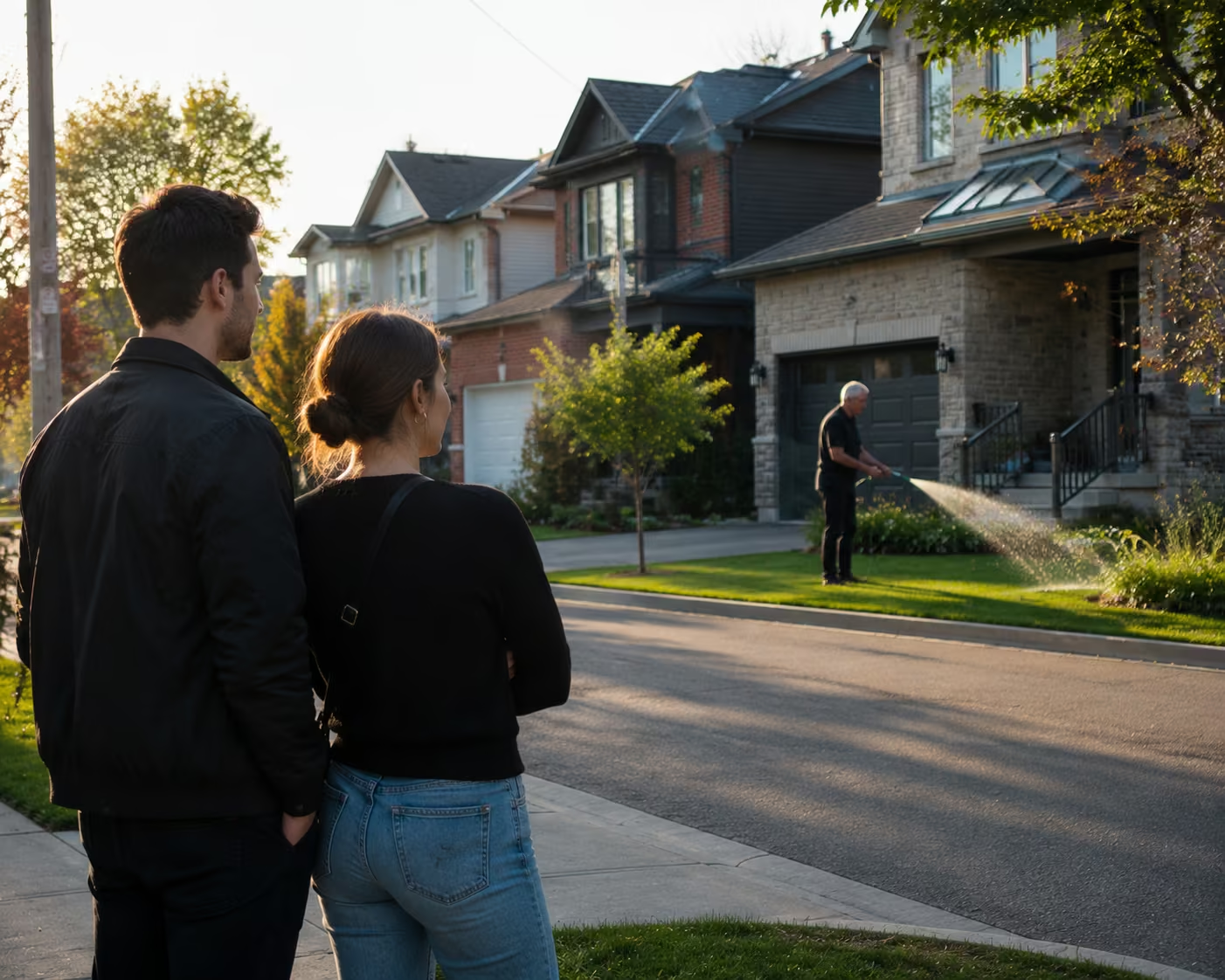
Here is a fun generational party trick. Ask anyone under 35 how worried they are about making next month's housing payment, then ask their parents the same question, and watch the gap. New polling from Nanos Research puts a number on something most younger Canadians could already feel in their bones.
Nanos surveyed 1,044 Canadians between May 31 and June 2, and most people are, broadly, fine. Nearly three quarters said they are not worried or only somewhat not worried about covering next month's housing costs. That sounds like good news until you split it by age. Canadians 18 to 34 are more than twice as likely to report some level of worry about paying for housing as those 55 and older, 41.3% versus 18.3%. Same country, same month, wildly different emotional reality depending on your birth year.
It gets worse on the ownership side. A new sentiment report from NerdWallet Canada found 63% of 18-to-34-year-olds feel homeownership is out of reach, compared with 31% of people 55 and up. That is not a small generational gap. That is two different countries sharing a postal code.
The market is technically recovering. Technically.
The timing here is almost comedic. Just as younger Canadians are reporting peak housing anxiety, the Canadian Real Estate Association is out saying the market is waking up. National home sales rose 5.5% from April to May, the first month in 2026 with any real upward momentum, and the average national sale price hit $702,079, the first time it has cleared $700,000 in 23 months.
"The national sales increase from April to May was broad-based but driven disproportionately by Ontario, suggesting the HST rebate on new builds may have only briefly drawn the attention of buyers away from the existing home market," said Shaun Cathcart, CREA's senior economist.
Worth a quick sanity check before anyone gets too excited. That 5.5% bump is seasonally adjusted and month over month. Actual sales volume is still 5.1% below where it sat in May 2025. So the market did not roar back to life. It twitched, and everyone is calling it a pulse. Sellers and buyers are at least getting closer on price, with the sale-to-new-listings ratio climbing to 49.2% from 46.2%, which is a real signal even if the headline price jump is doing a lot of the talking.
Rents, meanwhile, are not following the same script. Zumper's Canadian rent index for May showed one-bedrooms down 0.5% month over month and 3.3% year over year, with two-bedrooms following a similar path. British Columbia remains the weakest region in the country on this front, with Vancouver, Victoria, and Kelowna all posting double-digit annual declines for one-bedrooms. So if you are renting in this province right now, you are catching a small break that homebuyers are not.
Affordability is still getting worse, not better
Here is where the recovery story runs into a wall. Ratehub.ca's monthly affordability report found every single one of the 13 major cities it tracks saw home affordability worsen in May. Not most. All thirteen. The culprit was a combination of rising home prices and a slight uptick in the average five-year fixed rate among the Big Five banks.
"Both mortgage rate and home price changes impacted home affordability this month," said Penelope Graham, mortgage expert at Ratehub.ca. "Home prices were up in the majority of the cities and the average of the Big Five Banks' five-year fixed rates increased slightly, but enough to have an impact on the income required to buy a home."
The damage was not spread evenly. St. John's took the biggest hit, with buyers needing $2,800 more in annual income to afford the average home compared with April, and monthly mortgage payments climbing $75. Montreal got off easiest, with the income requirement rising by a mere $10 and payments up just a dollar a month. If you are house hunting and feeling unlucky based on geography, you have evidence now.
Graham's advice for anyone close to a purchase or a renewal is to act rather than wait. "As conditions are anticipated to pick up in markets across Canada, it's important to have an idea of how differing price points and borrowing costs may impact your buying budget," she said. Translation: the window where rates and prices both behave is not guaranteed to stay open.
The cost of living problem hasn't gone anywhere
Housing anxiety does not exist in a vacuum, and the rest of the Nanos data makes that clear. 55% of Canadians say rising prices have affected them in some way, whether through cancelling a major purchase, finding it harder to cover basic necessities, or both at once. That dwarfs the 41% who say inflation has not been a significant problem for them.
Atlantic Canada is feeling this hardest, with close to seven in ten residents reporting some cost-of-living impact. And the age divide shows up again here too. 54% of Canadians 55 and older say inflation has not been a major issue for them, compared with just 24% of those 18 to 34. Older Canadians, on average, own their homes outright, have paid-off mortgages, and locked in lower costs years ago. Younger Canadians are buying into today's prices with today's wages. The math was never going to feel the same.
Then there is the long view, and it is not cheerful. Nanos has tracked generational expectations since 2012, and right now 65% of Canadians believe the next generation will be worse off than today, with only 9% expecting things to improve. That works out to a net score of minus 56.4, close to the worst level ever recorded in over a decade of tracking. People are not just stressed about this month's bills. They have largely stopped expecting it to get better for whoever comes next.
The NerdWallet data backs this up from a slightly different angle, asking Canadians what is actually standing between them and a home. Close to a quarter point to living costs that are already too high or too unpredictable to plan around. Another 18% say they simply cannot save enough for a down payment. By comparison, worry about the US trade situation barely registers at 6%, and concern about job security sits at 8%. Whatever is keeping people out of the housing market right now, it is not headline geopolitics. It is the math of rent, groceries, and saving at the same time.
So yes, the market is showing some life. Sales ticked up, prices crossed a threshold they have not touched in nearly two years, and there is a real argument that the worst of the slowdown is behind us. None of that has translated into relief for the people who need it most. If you are 27 and renting, the headline that home sales jumped 5.5% is not really news about you. It is news about a market slowly stabilizing for people who already own a piece of it.
The content of this article is for informational purposes only and should not be considered as financial, legal, or professional advice. Coldwell Banker Horizon Realty makes no representations as to the accuracy, completeness, or suitability of the information provided. Readers are encouraged to consult with qualified professionals regarding their specific real estate, financial, and legal circumstances. The views expressed in this article may not necessarily reflect the views of Coldwell Banker Horizon Realty or its agents. Real estate market conditions and government policies may change, and readers should verify the latest updates with appropriate professionals.