The headlines have been pretty encouraging lately. Rents falling across Canada. Vacancy rising. Landlords offering free months and moving bonuses just to fill units. After three brutal years for renters, it sounds like the tide finally turned.
It did. Just not for the renters who needed it most.
CMHC's mid-year rental market update, released today, confirms what the headline numbers have been suggesting for months: Canada's rental market is genuinely easing. Vacancy rates are up, asking rents are falling in many major cities, and some landlords are offering incentives for the first time in years. But buried in that same report is a caveat that doesn't make most news coverage: almost all of that relief is concentrated in newer, higher-priced units. In the lower-rent segments, where affordability pressure was worst to begin with, conditions remain tight.
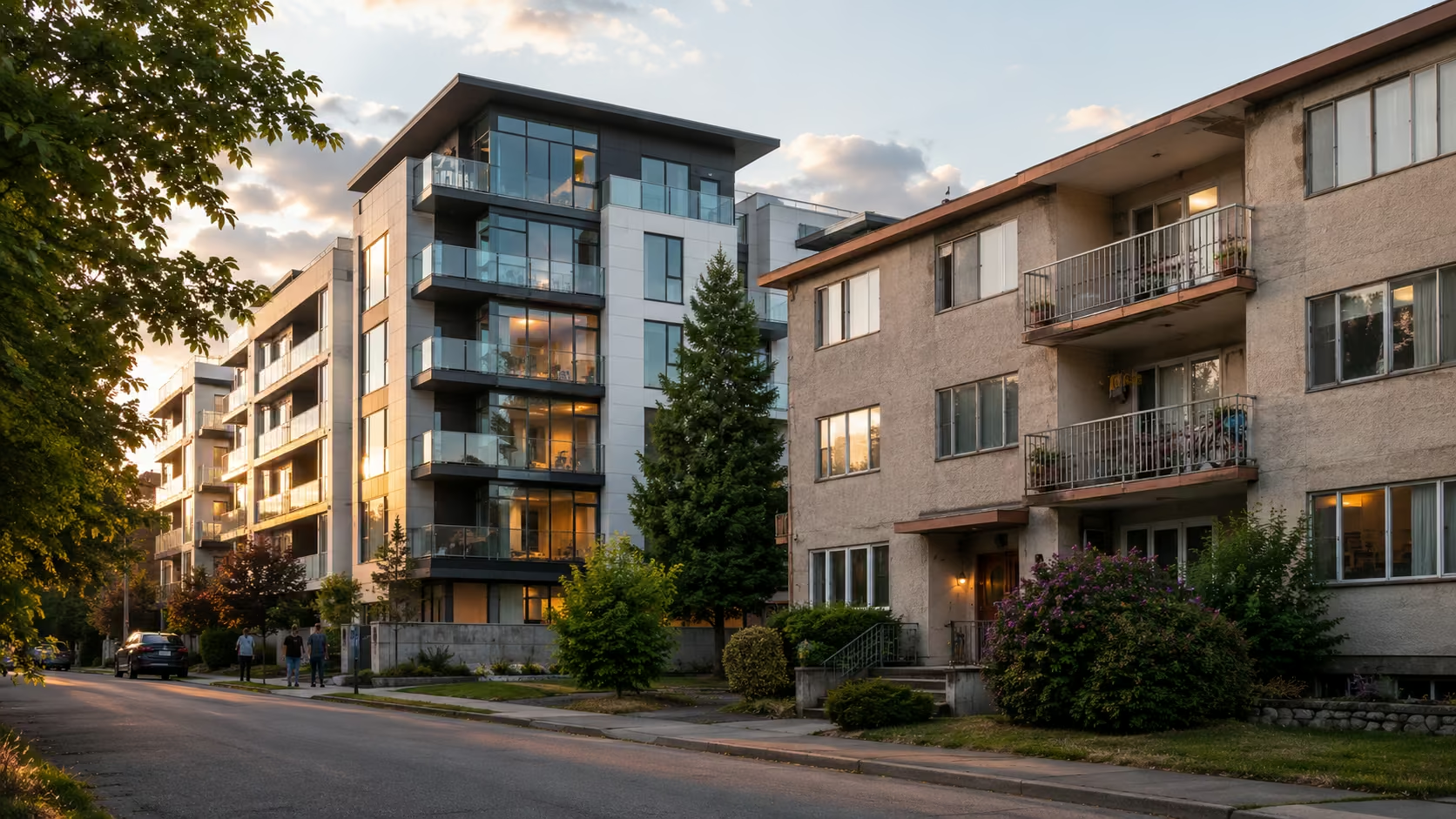
In other words, Canada's rental market didn't cool evenly. It split.
The Units That Are Sitting Empty Are Not the Ones Most Renters Can Afford
The supply wave that finally pushed vacancy up wasn't built for the median renter. It was built for the investor math of 2021 and 2022, when construction costs were high, interest rates were rising, and the only way projects pencilled out was at premium rents. Luxury finishes, rooftop patios, in-suite laundry, new appliances. The projects that got built were the ones targeting $2,200-plus monthly rents, because anything below that couldn't cover financing.
Those units are now sitting longer. Developers are offering a free month here, a moving allowance there. Vacancy in new purpose-built rental buildings in Vancouver, Toronto, and Calgary has climbed noticeably as that supply landed all at once.
But if you were looking for a $1,500 two-bedroom, the kind that doesn't come with a concierge but lets a household live within budget, you're still competing for aging stock with very few options. CMHC's deputy chief economist Tania Bourassa-Ochoa put it plainly in the mid-year update: lower-rent segments remain tight across the board, with affordability issues that the current easing cycle has done almost nothing to address.
This isn't a subtle distinction. It fundamentally changes what "the rental market is cooling" actually means depending on your income.
Asking Rents vs. What Tenants Are Actually Paying
There's another layer here that keeps getting glossed over. The numbers showing rents falling refer mostly to asking rents, what a vacant unit is listed for right now. That figure has come down. But if you're an existing tenant already in a lease, your rent has likely continued climbing, just more slowly than before.
Across many Canadian cities, there's a significant gap between what a new tenant pays for a unit and what a long-term tenant pays for the same type of unit. In markets with rent control, sitting tenants see annual increases capped by provincial guidelines. When they finally move or get pushed out, the rent resets to market. That reset is still significant in most markets even if asking rents have moderated from their 2023 peak.
The result is a market that looks loosening on paper but still punishes mobility. If you're in a below-market unit and you move, for a new job, a growing family, a relationship change, you step into a market where even the "falling" rents can represent a substantial increase over what you were paying. CMHC's data has consistently shown this dynamic, and it hasn't meaningfully resolved.
What This Actually Means for BC Renters
British Columbia sits in an interesting position within this national picture. CMHC's 2026 housing outlook forecasts BC's economy improving after a weak 2025, with employment conditions gradually strengthening. Rental market conditions are expected to soften further as new supply continues arriving.
Vancouver has seen a notable shift. Landlords offering move-in incentives would have been unthinkable in 2022. That's real. But Vancouver's rental market was so far from balanced that a year of softening still leaves it among the least affordable in the country. New purpose-built units landing in Brentwood or East Vancouver at $2,500 for a one-bedroom contribute to vacancy statistics and push asking rents down marginally. They don't solve the problem for a nurse or a warehouse worker trying to keep housing costs under 30% of take-home pay.
Interior BC markets, including Kelowna, have seen vacancy rates shift considerably from the near-zero levels of 2022 and 2023. That has improved conditions for some renters. But the same pattern holds: most of the new supply is in the mid-to-upper end of the market, and the older stock that was affordable is still in demand.
The Second Half of 2026
CMHC's forecast for the rest of this year is more of the same: continued easing in overall vacancy, continued softening in asking rents, continued tightness in lower-rent segments. Bourassa-Ochoa flagged two things worth watching. Supply: there are still a significant number of units under construction that will hit the market in the second half of the year, adding more pressure to the higher-end vacancy picture. And demand: reduced immigration targets and economic uncertainty have both pulled population growth lower than expected, which takes pressure off the overall market but doesn't create affordable units where none exist.
The longer-term concern is one this blog has covered before. The construction pipeline for new rental buildings is thinning, because the conditions that made rental development viable in 2021, cheap debt, optimistic rent projections, strong immigration, have shifted. Fewer starts today means fewer completions in 2028 and 2029. If population growth rebounds or immigration policy pivots again, the same shortage story from 2022 could reassert itself, just with a different cast.
For renters in the middle of this market, the honest summary is this: if your income puts you in reach of newer, higher-end units, you have more negotiating power right now than you've had in years. Push for concessions. Look at new builds where vacancy is highest. That leverage is real. But if you're trying to find something affordable in the traditional sense, rent that leaves room for groceries, savings, and the rest of life, the headline numbers don't describe your market. Your market is still tight. The cooling happened somewhere else.
The content of this article is for informational purposes only and should not be considered as financial, legal, or professional advice. Coldwell Banker Horizon Realty makes no representations as to the accuracy, completeness, or suitability of the information provided. Readers are encouraged to consult with qualified professionals regarding their specific real estate, financial, and legal circumstances. The views expressed in this article may not necessarily reflect the views of Coldwell Banker Horizon Realty or its agents. Real estate market conditions and government policies may change, and readers should verify the latest updates with appropriate professionals.