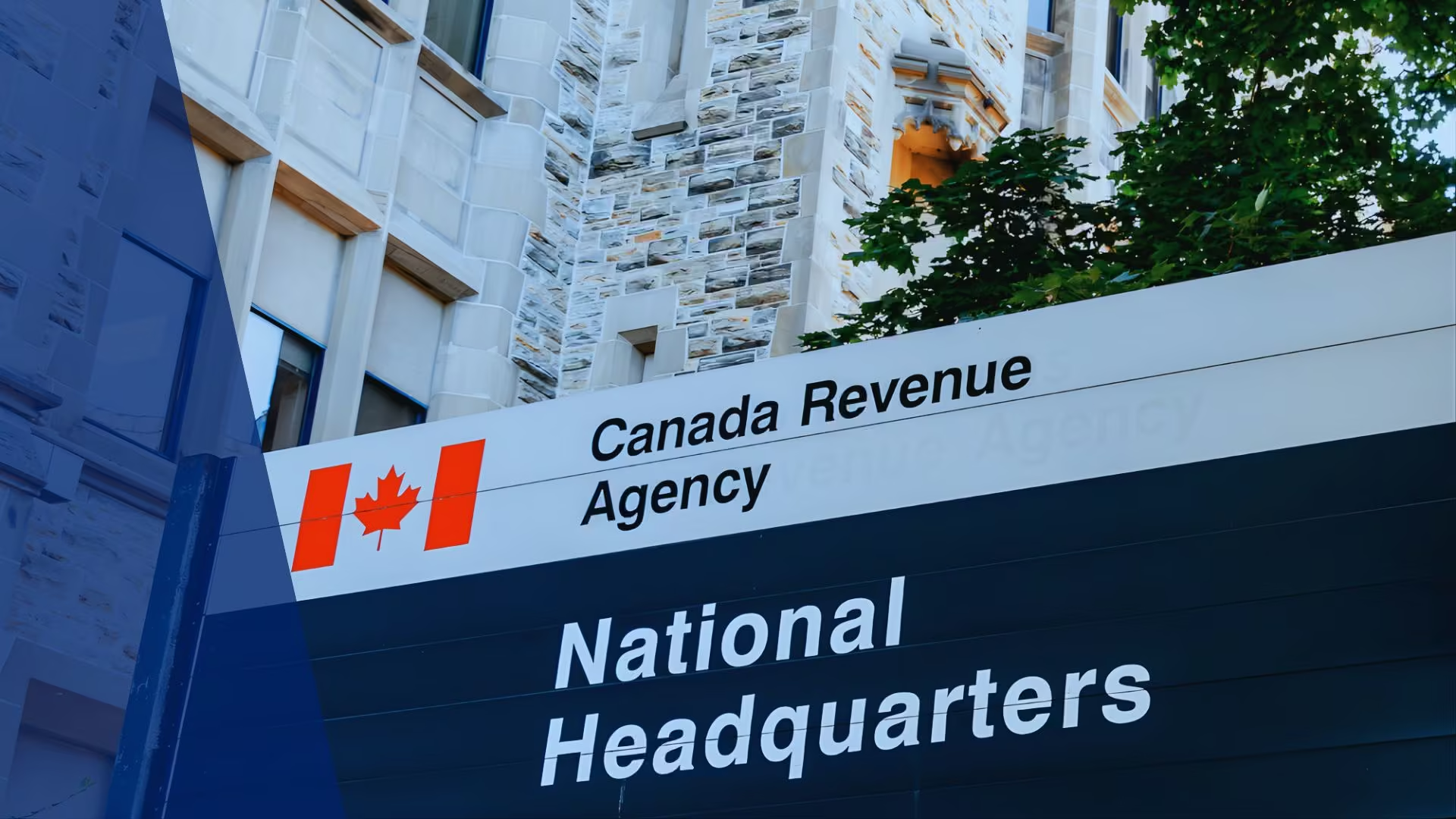
The Canada Revenue Agency isn't playing around anymore when it comes to real estate.
Between April 2024 and March 2025, the CRA completed 14,854 real estate audits, up from 12,733 the previous year. Those audits pulled in $849 million in taxes and penalties. That's up from $648.5 million the year before.
The numbers tell a clear story. The CRA is getting better at finding issues, and they're finding more of them. They're using better data analytics and getting information from sources you might not expect, from land title registries to municipal property tax rolls.
If you own property in Canada, whether you're an investor, a homeowner who's sold recently, or someone who's flipped a house or two, you need to understand what catches the CRA's attention. Here are the 10 areas they're actively investigating.
1. Your Income Doesn't Match Your Lifestyle
Let's say you're buying a $2 million home in Kelowna, but your tax return shows you made $60,000 last year. The CRA will notice. They're specifically looking for situations where someone acquires expensive real estate without obvious reported income to support it.
This isn't just about the purchase price. They look at maintenance costs, property taxes, mortgage payments. If the numbers don't add up, they assume there's unreported income somewhere. And they're usually right.
The solution is simple but uncomfortable for some people: report all your income. Every dollar. If you're in a cash business, if you have foreign income, if your parents are helping with the down payment, keep proper documentation. The CRA isn't guessing anymore.
2. Property Flipping Gets Special Attention
The flipping game changed dramatically in 2023. Under the residential property flipping rule, if you sell a property within 365 days of buying it, your profit is automatically considered business income. That means it's 100% taxable, not the 50% you'd pay on capital gains.
The CRA has identified three types of flippers they're watching closely. First, professional contractors who renovate and flip. Second, speculators who buy pre-construction condos and flip the purchase rights before closing. Third, individual renovators who buy, renovate, live in the property briefly, then sell while trying to claim the principal residence exemption.
That last group is especially risky. The CRA knows that claiming the principal residence exemption on multiple flips is a red flag. If you're doing this, they will audit you eventually.
The rule includes some exceptions for life events like death, divorce, illness, or job relocation. But those are narrowly defined. Don't assume you qualify without getting professional advice.
3. Unreported Capital Gains on Any Property Sale
Here's something many people miss: since 2016, you must report every real estate sale, even if there's no tax owing.
Sold your principal residence for a nice profit but you're fully exempt? Still need to report it on Schedule 3 of your tax return. Forgot to report it? The CRA can reassess your return at any time, with no statute of limitations.
This catches a lot of people. They assume that if there's no tax owing, there's no reporting requirement. Wrong. The CRA made this change specifically to track who owns what and when they sell it.
If you forget to report and later realize your mistake, you can file an amended return. But there's a penalty: the lesser of $8,000 or $100 per month from when you should have filed. That adds up fast.
4. Non-Resident Sellers Who Don't Pay Canadian Tax
When a non-resident sells Canadian real estate, they're required to pay tax on any capital gain. They can't claim the principal residence exemption, even if they lived in the property.
But here's what makes this interesting: the burden is partly on the buyer. You're supposed to verify whether the seller is a Canadian resident. Most real estate lawyers or notaries will confirm this, but if they don't, you could be on the hook for the seller's unpaid taxes.
The CRA recommends getting a certificate of compliance from the seller before releasing funds. This proves they've either paid the tax or arranged to pay it. Without this, you're taking a risk.
5. Unreported Worldwide Income
Canadian residents pay tax on worldwide income. Period. Owning property in Canada is a significant tie to Canada for tax purposes, even if you're living abroad for work or other reasons.
The CRA has gotten much better at finding unreported foreign income. They now share data with over 100 countries through the Common Reporting Standard, which means foreign banks are reporting account information to the CRA.
If you have rental income from a US property, investment income from overseas accounts, or business income from foreign sources, it all needs to be reported on your Canadian return.
6. GST/HST Issues on New or Renovated Homes
This is where the CRA is collecting serious money, especially in Ontario. Between April 2023 and March 2024, they assessed $209.4 million related to GST/HST on new home construction.
If you build or substantially renovate a home and then sell it, you need to collect and remit GST/HST. If you build a home and then rent it out, you're deemed to have sold it to yourself, and you owe GST/HST on the fair market value immediately.
Many builders don't realize they're "builders" for tax purposes. You don't need to be a professional developer. If you construct a home with the intention to sell it, even if you change your mind later, you could be caught by these rules.
7. Incorrectly Claimed Rebates
The GST/HST New Housing Rebate is available if you're buying or building a new home as your primary residence. The New Residential Rental Property Rebate is for properties you're renting out.
But if you're flipping, you don't qualify for either rebate. And you need to charge GST/HST on the sale.
The CRA is finding cases where people claim the rebate, then flip the property within months. That's exactly what they're looking for. The rebates are significant, so the tax owing can be substantial when they disallow the claim.
8. Land Developers Face Heavy Scrutiny
Developers who buy vacant land or existing properties to demolish and redevelop are in a special category. These transactions have significant income tax and GST/HST implications, and the CRA knows it.
The profits from land development are typically fully taxable as business income. There's rarely any argument about capital gains treatment when you're actively developing land. The margins can be high, so the tax bills are substantial.
If you're in this space, you need professional tax advice from day one. The costs of getting it wrong are too high to wing it.
9. Principal Residence Exemption Misuse
The principal residence exemption is one of the best tax breaks in Canada. When you sell your primary home, the gain is completely tax-free. But only one property per family per year can be designated as a principal residence.
The CRA tightened these rules in 2016 for a reason. Too many people were gaming the system. They're specifically looking for:
- People who claim multiple properties as principal residences in the same years
- Quick flips where someone lives in a property briefly and claims the exemption
- Properties that generate rental income being claimed as principal residences
- Cottages or recreational properties claimed alongside a main home without proper designation
You need to file Form T2091 (IND) to designate your principal residence. If you own more than one property during your ownership period, you need to carefully calculate which property to designate for which years to minimize your overall tax.
This gets complicated fast if you have a house and a cottage, or if you've bought and sold multiple properties over the years. Get advice from someone who specializes in real estate taxation.
10. Real Estate Agents and Brokers
If you're a realtor, you're automatically in a higher risk category. The CRA figures that people in the business are more likely to understand how to structure deals to minimize tax, and more likely to engage in flipping activities.
This doesn't mean you're doing anything wrong. It just means the CRA pays closer attention when realtors buy and sell properties, especially if it's frequent.
The best approach is to maintain clear separation between your personal real estate transactions and your business activities. Document your intentions when you buy. If you're buying as an investment, treat it as an investment. If you're buying to flip, report it correctly as business income.
What the CRA's Focus Means for You
The 2024 budget added another $73 million over five years specifically for real estate audits. This comes on top of previous funding. The message is clear: real estate tax compliance is a priority.
From April 2015 to March 2023, real estate audits have generated $2.7 billion in additional taxes and penalties. That's not slowing down.
But here's the thing. Most of these audits wouldn't happen if people reported correctly in the first place. The CRA uses an "escalating approach." They start with education and outreach. If you make a mistake and correct it voluntarily, especially through their Voluntary Disclosure Program, they're often willing to waive penalties.
If you ignore the rules, misreport intentionally, or fail to respond to their inquiries, they escalate to audits and penalties. That 50% gross negligence penalty for knowingly making false statements adds up quickly on real estate transactions.
The Bottom Line
Real estate transactions in Canada come with serious tax obligations. The CRA has better tools, more funding, and clearer priorities than ever before. They know what to look for, and they're finding it more often.
If you're buying, selling, or developing real estate, the smart move is to get professional tax advice before you transact, not after the CRA comes knocking. A few hundred dollars in accounting fees now can save you tens of thousands in penalties and interest later.
The rules around property flipping, principal residence exemptions, GST/HST on new construction, and reporting requirements aren't suggestions. They're legal obligations. And the CRA is watching more closely than ever.
Whether you're a first-time home seller, a seasoned investor, or somewhere in between, understanding what the CRA is looking for helps you stay compliant and avoid problems. If you have questions about your specific situation or need guidance on navigating complex real estate transactions in the Okanagan, our team at Coldwell Banker Horizon Realty works with experienced tax professionals and can help connect you with the right resources to keep your real estate investments on solid ground.
The content of this article is for informational purposes only and should not be considered as financial, legal, or professional advice. Coldwell Banker Horizon Realty makes no representations as to the accuracy, completeness, or suitability of the information provided. Readers are encouraged to consult with qualified professionals regarding their specific real estate, financial, and legal circumstances. The views expressed in this article may not necessarily reflect the views of Coldwell Banker Horizon Realty or its agents. Real estate market conditions and government policies may change, and readers should verify the latest updates with appropriate professionals.