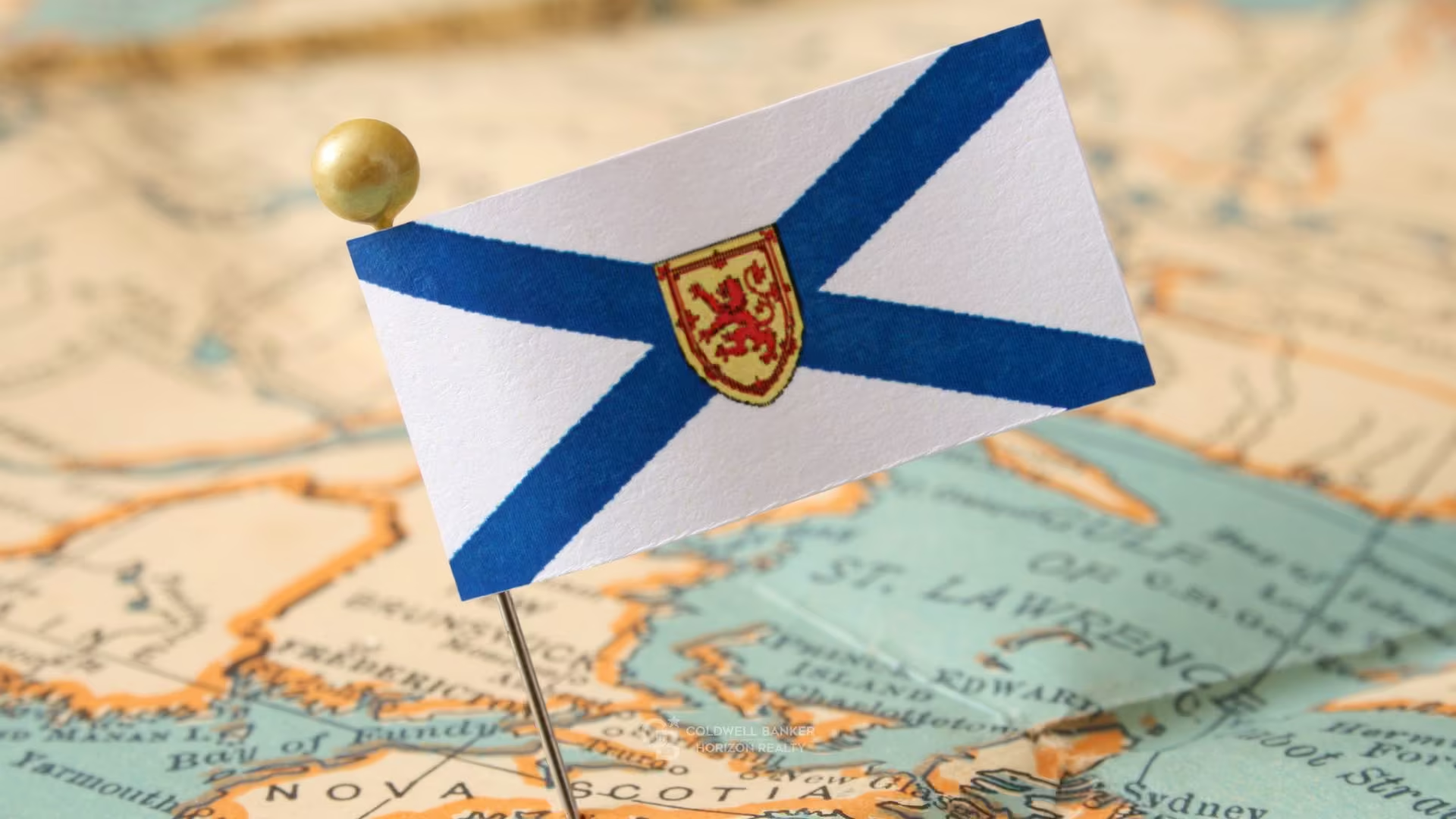
Nova Scotia real estate had quite the run. From January 2020 to April 2022, typical home prices shot up 84.5%, outpacing even the national frenzy that came with Canada's immigration surge. Low rates and an influx of Toronto buyers chasing affordability turned the province into a speculative playground.
Now? Prices are dropping fast, inventory keeps climbing, and there's a wave of investor-owned new construction about to flood the market. Perfect time for the Government of Nova Scotia to launch a First-Time Home Buyers Pilot Program that lets people buy with just 2% down.
The timing raises eyebrows.
What This Program Actually Offers
Here's the setup. The province partnered with credit unions to offer first-time buyers a shot at homeownership with minimal upfront cash. The details:
The mechanics:
- 2% down payment (compared to the standard 5% minimum for insured mortgages)
- No CMHC or Sagen insurance premiums, the province guarantees the loan instead
- Maximum purchase price of $570,000 in Halifax, $500,000 elsewhere
- Only available through participating credit unions (East Coast Credit Union, CUA, Valley Credit Union)
- Interest rate capped at Prime + 2%
- Minimum credit score of 630, or alternative proof of creditworthiness
- Must still pass the federal B-20 mortgage stress test
Sounds accessible. But there's a catch that most buyers won't see coming.
The Golden Handcuffs Problem
Buried in the fine print is something called a non-transferable deficiency guarantee. What this means: you're stuck with your credit union until you hit 20% equity. Can't shop around. Can't refinance with a better rate at a big bank. You're locked in.
The math on this matters. Starting with 2% equity, you're looking at 7 to 9 years of payments before you reach that 20% threshold, assuming modest 2-3% annual appreciation. Any appreciation might be generous given recent price drops.
Being trapped with one lender kills your negotiating power. The government caps rates at Prime + 2%, which sounds protective until you realize CMHC-backed mortgages typically come in around Prime minus 0.5%. That's a 2.5 percentage point spread, or about $200-300 more per month on a $500,000 mortgage. Over nine years? That's real money.
The Market They're Pushing You Into
Let's talk about what's actually happening in Nova Scotia right estate. CREA data from December shows Halifax home prices fell 1.8% in one month. Provincial prices dropped 3.2%. Condo apartments? Down 3.8% across both Halifax and the province.
If this program existed in December and you bought on the first of the month with 2% down, there's a solid chance your entire down payment would have evaporated by New Year's Eve. Condos? You'd be underwater.
Who absorbs that loss? The province covers 90%, your credit union eats 10%. Taxpayers hold the bag.
The Investor Problem Nobody's Talking About
Nova Scotia has always had investors, but the recent boom changed the composition. StatCan's housing data shows over 30% of properties in the province were investor-owned in 2023, the highest share in Canada.
But here's the real issue: registry data reveals that 54.8% of Halifax condos built after 2016 are investor-owned. That's just the ones that made it to registration. Pre-construction flippers who bail before completion don't show up in these numbers.
In Toronto, investors account for 70-80% of pre-construction purchases. Given that Nova Scotia prices were rising faster than Toronto during the boom, it's reasonable to assume similar investor participation. Halifax had 13,997 new homes under construction in December, up 35.9% year-over-year. About 88.5% are apartments.
That's a lot of supply hitting a cooling market.
How Capital Cushioning Actually Works
There's a playbook here, and it's not new. Remember the US subprime crisis narrative about reckless borrowers? Later research showed the real story: prime credit investors were using subprime products for leverage, then walking away when prices crashed. Actual subprime borrowers, who needed somewhere to live, stayed put and kept paying through years of negative equity.
This program follows similar logic. It's capital cushioning, transferring ownership from low-use owners (investors looking to exit) to high-use buyers (first-timers who need housing) right as prices decline. The mechanism shifts risk from investors to young buyers who'll ride out losses because they don't have a choice.
The province absorbs 90% of defaults, credit unions take 10%. But defaults are less likely because these buyers are stuck. They need housing. They'll pay through negative equity rather than walk away.
It's effective policy for market stabilization. Terrible policy for the individuals being stabilized into losses.
Better Options Exist
None of this means don't buy a home. But rushing into a declining market with 2% down and golden handcuffs? That's not a great plan.
Wait a few months. Save for a proper 5% down payment. Get a standard insured mortgage with actual portability and the ability to shop rates. Inventory is climbing, not disappearing. Prices are falling, not stabilizing.
The only urgency here is the government's need to support a market with too many investors looking for exits and too much supply coming online. That's their problem. It doesn't need to become yours.
If you're serious about buying in Nova Scotia, work with a mortgage broker who understands the full picture. Get independent advice. Read every line of the fine print. And ask yourself: if this program is such a great deal, why are banks staying away?
Sometimes the answer is obvious.
The content of this article is for informational purposes only and should not be considered as financial, legal, or professional advice. Coldwell Banker Horizon Realty makes no representations as to the accuracy, completeness, or suitability of the information provided. Readers are encouraged to consult with qualified professionals regarding their specific real estate, financial, and legal circumstances. The views expressed in this article may not necessarily reflect the views of Coldwell Banker Horizon Realty or its agents. Real estate market conditions and government policies may change, and readers should verify the latest updates with appropriate professionals.