There's a pattern that shows up during almost every period of sustained uncertainty: people stop chasing the next thing and start protecting themselves. They sleep more carefully, eat more carefully, and pay close attention to their mental state. They want quiet. They want ground under their feet. And increasingly, a significant portion of them are willing to pay for it.
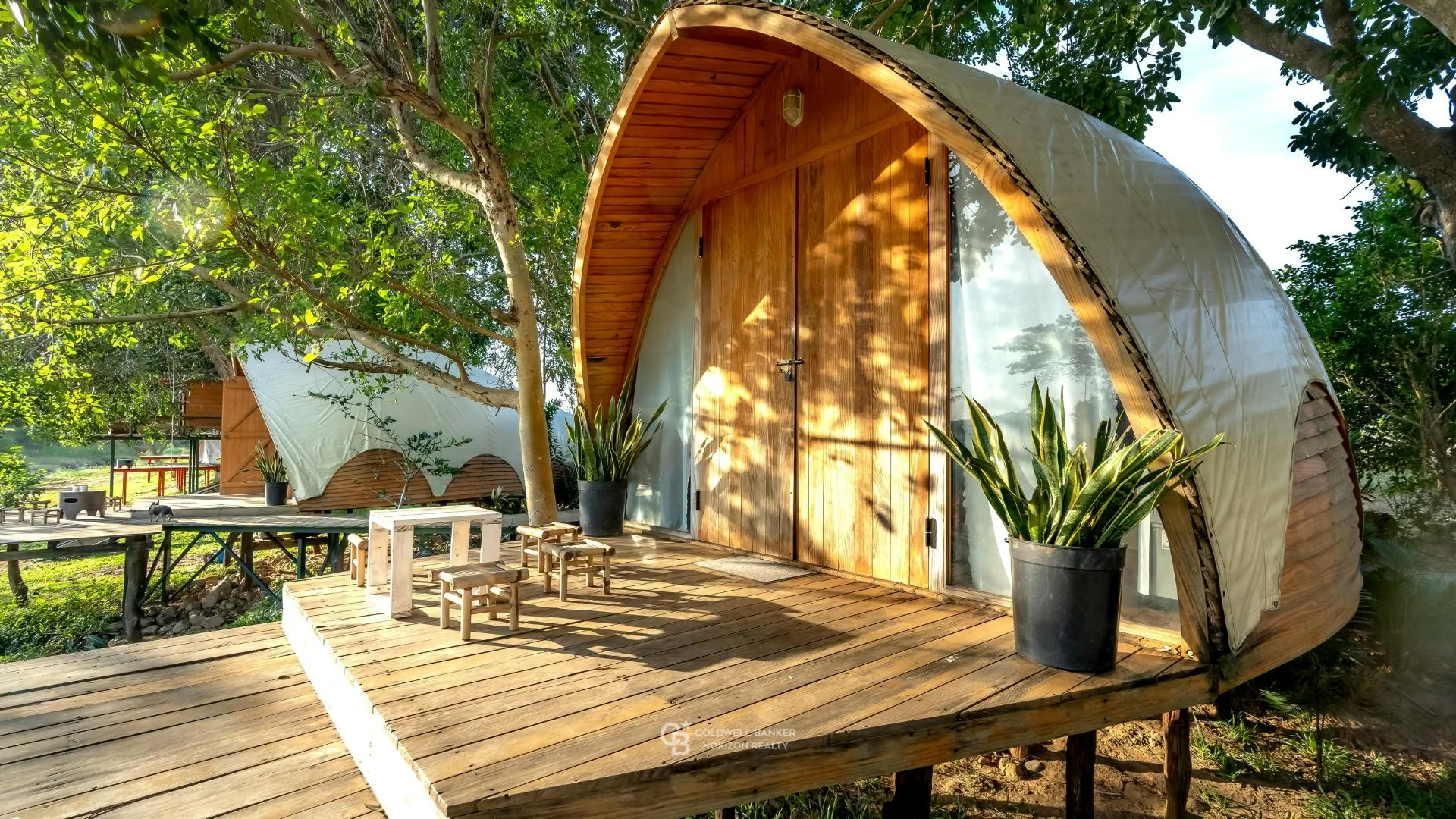
That impulse is now showing up in Canada's real estate market in a way that's hard to ignore. Rural properties once listed simply as "acreage" or "country home" are increasingly being positioned as something else entirely: wellness retreats, glamping sites, and what agents are beginning to call hybrid lifestyle-income properties.
The Numbers Behind the Shift
The wellness industry is not a niche. According to the Global Wellness Institute's 2025 Monitor, the global wellness economy reached $6.8 trillion in 2024 and is growing significantly faster than global GDP. GWI identifies Canada as one of the standout growth markets in the global wellness economy, alongside other high-income countries seeing sustained demand for health-focused spending.
Within that larger figure, wellness real estate has been the fastest-moving sector. GWI data shows the global market roughly doubled from $225 billion in 2019 to the mid-$500 billion range in 2024, growing at about 19.5% annually during that period. The sector is on track to reach around $1.1 trillion globally by 2029.
Canada's wellness tourism market specifically is on a steep trajectory. Grand View Research projects it will reach US$81 billion by 2030, up from around US$31 billion in 2022. That kind of demand creates real downstream pressure on the property market, because those guests need somewhere to stay.
And then there's glamping. Canada's glamping market reached USD $72 million in 2024, and is forecast to nearly triple by 2033, driven by demand from millennial and Gen Z travellers who want immersive nature experiences without sacrificing comfort. Geodesic domes, a-frame cabins, and luxury tents on rural acreages are no longer novelties. They're revenue streams.
What This Looks Like on the Ground
The high-profile end of the market is already well-developed. BC is home to world-class facilities like Mountain Trek, named by Travel + Leisure as the best health retreat in Canada and one of the top in North America. Sparkling Hill Resort in Vernon, with its 40,000-square-foot European spa, draws guests from across the country.
But the shift happening in rural markets is quieter and arguably more interesting from a real estate perspective. Properties that would have previously traded as hobby farms, bed-and-breakfasts, or simple country estates are now entering the market with a different pitch: the land itself as a wellness offering.
Acreage with a creek, a secondary structure, and some clearings is now described in terms of retreat potential. A farmhouse with a barn and outbuildings gets listed with glamping possibilities front and centre. The underlying property hasn't changed, but the buyer profile has.
Royal LePage's 2025 Spring Recreational Property report found the median single-family recreational property price forecast to rise 4% in 2025 to $652,808, even amid broader economic caution driven by trade tensions. Demand for rural retreats continues to outpace supply in most Canadian markets, with inventory growth barely keeping pace. The desire for land and distance from urban density, which accelerated during the pandemic, never fully retreated.
What has changed is the sophistication of the buyer. The person looking at a 10-acre parcel in the Okanagan is no longer just imagining weekend escapes. They're running numbers. They're thinking about short-term rental income, retreat bookings, and what a small glamping operation might yield in peak season. As REMAX noted in their 2025 Canadian Cabin & Cottage Trends Report, buyers are increasingly drawn to recreational properties as long-term investments, particularly as stock market volatility makes land look steadier by comparison.
The Okanagan Fits the Picture
The Okanagan is well-positioned for this. It already draws visitors for wine, outdoor recreation, and lake access. The wellness layer builds naturally on that foundation, and the infrastructure is there to support it. Communities from Penticton to North Okanagan have existing retreat operations, with more properties being converted or purpose-purchased every season.
Climate also matters here. GWI research has noted that cooler northern regions, including British Columbia, are attracting growing attention as climate migration begins redirecting tourism development. The Okanagan's combination of dry summers, mild winters relative to the rest of Canada, and dramatic natural scenery makes it a credible year-round destination for the kind of traveller the wellness market is producing.
That said, buying a rural property with the intention of running any kind of hospitality or income-generating use requires careful diligence. Zoning is not uniform. Agricultural Land Reserve designations, regional district regulations, and short-term rental rules vary significantly across the valley. A property in one area of the Okanagan may welcome a small retreat operation; a neighbouring parcel under different zoning may prohibit it entirely. What looks like a business opportunity at first glance can be much more complicated once you start pulling permits.
The wellness real estate trend is real, and the demand behind it is structural, not a cycle. But the properties themselves still need to be evaluated as real estate first. That means checking what the land actually permits before pricing in the retreat potential.
If you're looking at rural or acreage properties in the Okanagan with an eye toward lifestyle income, the team at Coldwell Banker Horizon Realty can help you understand what's actually possible on a given parcel, and what the numbers look like once zoning, infrastructure, and carrying costs are factored in.
The content of this article is for informational purposes only and should not be considered as financial, legal, or professional advice. Coldwell Banker Horizon Realty makes no representations as to the accuracy, completeness, or suitability of the information provided. Readers are encouraged to consult with qualified professionals regarding their specific real estate, financial, and legal circumstances. The views expressed in this article may not necessarily reflect the views of Coldwell Banker Horizon Realty or its agents. Real estate market conditions and government policies may change, and readers should verify the latest updates with appropriate professionals.